A little inspiration. A little direction.
Open your sketchbook.
We’ll help you start.
Find an artwork you love, then draw or paint from it with an illustrated plan for your materials and the time you have.
No account needed. Bring the materials you have.
Take a look insideA landscape, one step at a time.
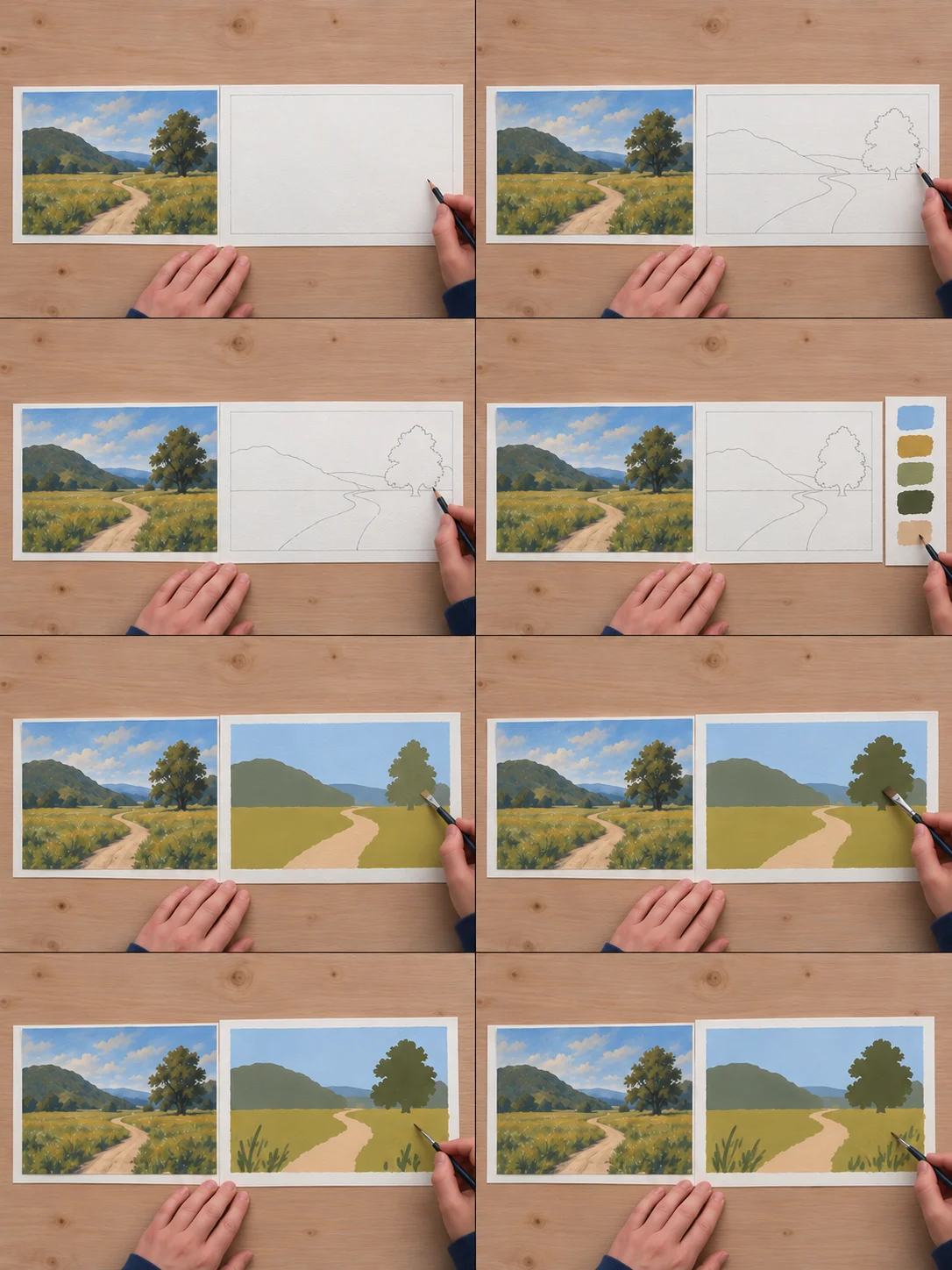
Museum references
Illustrated steps
Plans for your time
Drawing & painting guidance
A reference is just the beginning
Choose what to practise.
Follow the illustrated steps.
Choose a focus and follow illustrated steps with your reference beside you. Preview a few moments from the lessons.
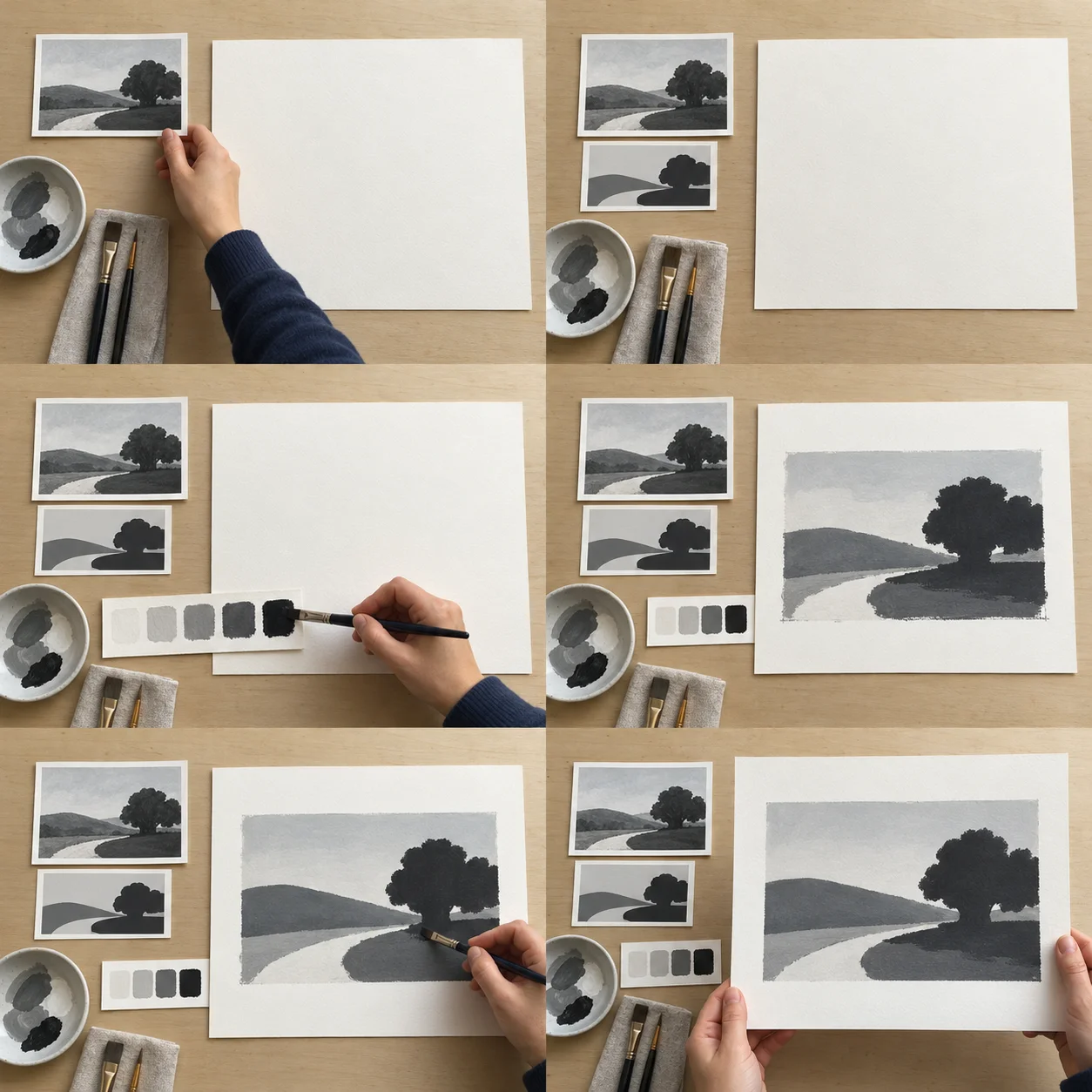
See light and dark more clearly.
Practise grouping light and dark areas so the big shapes are easier to see.
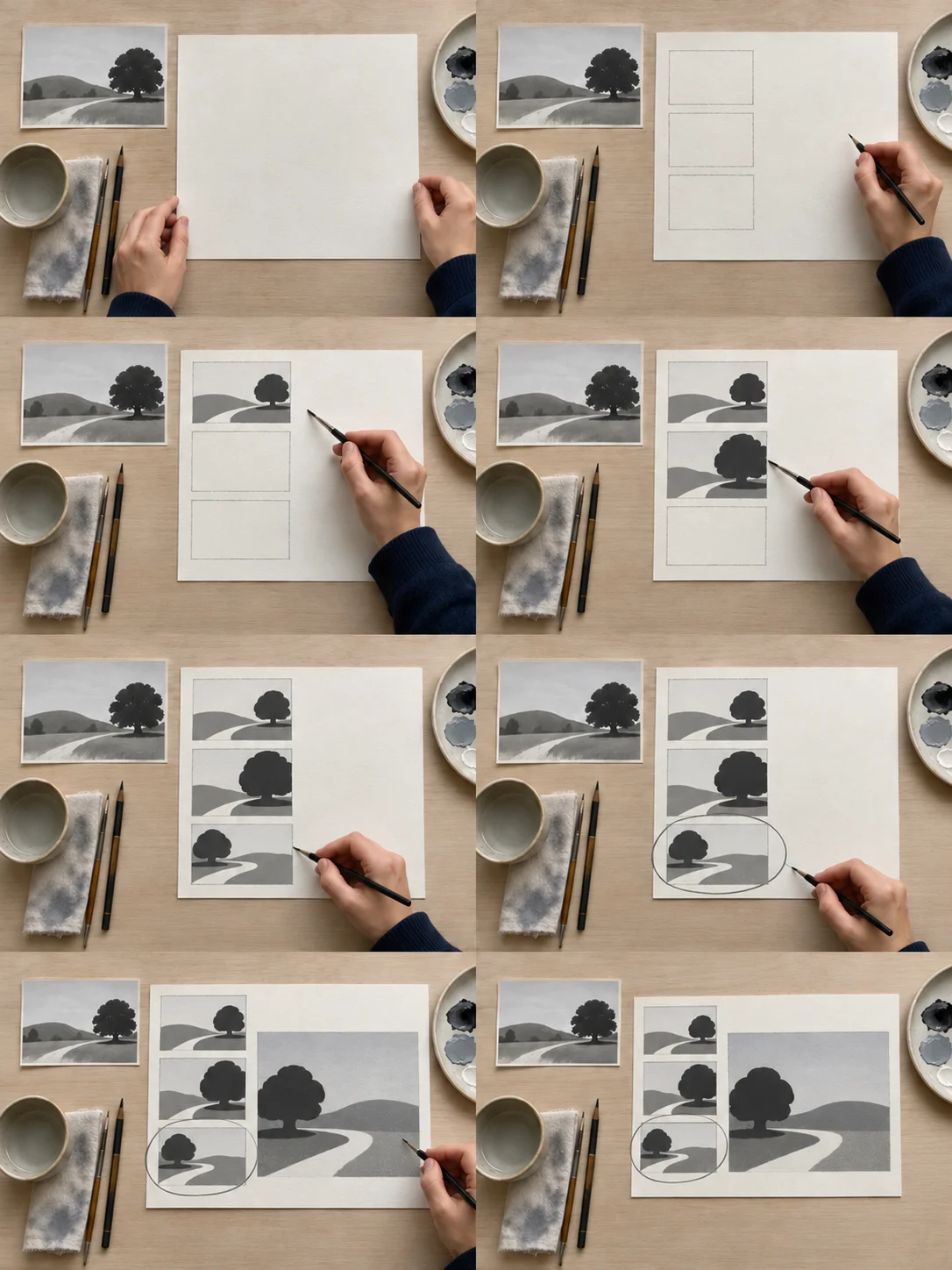
Find an arrangement that works.
Compare small sketches of the big shapes and the spaces around them before choosing an arrangement.
Learn by following an artwork.
Follow the original shapes and arrangement, from first outlines to a simplified copy or a longer, more detailed study.
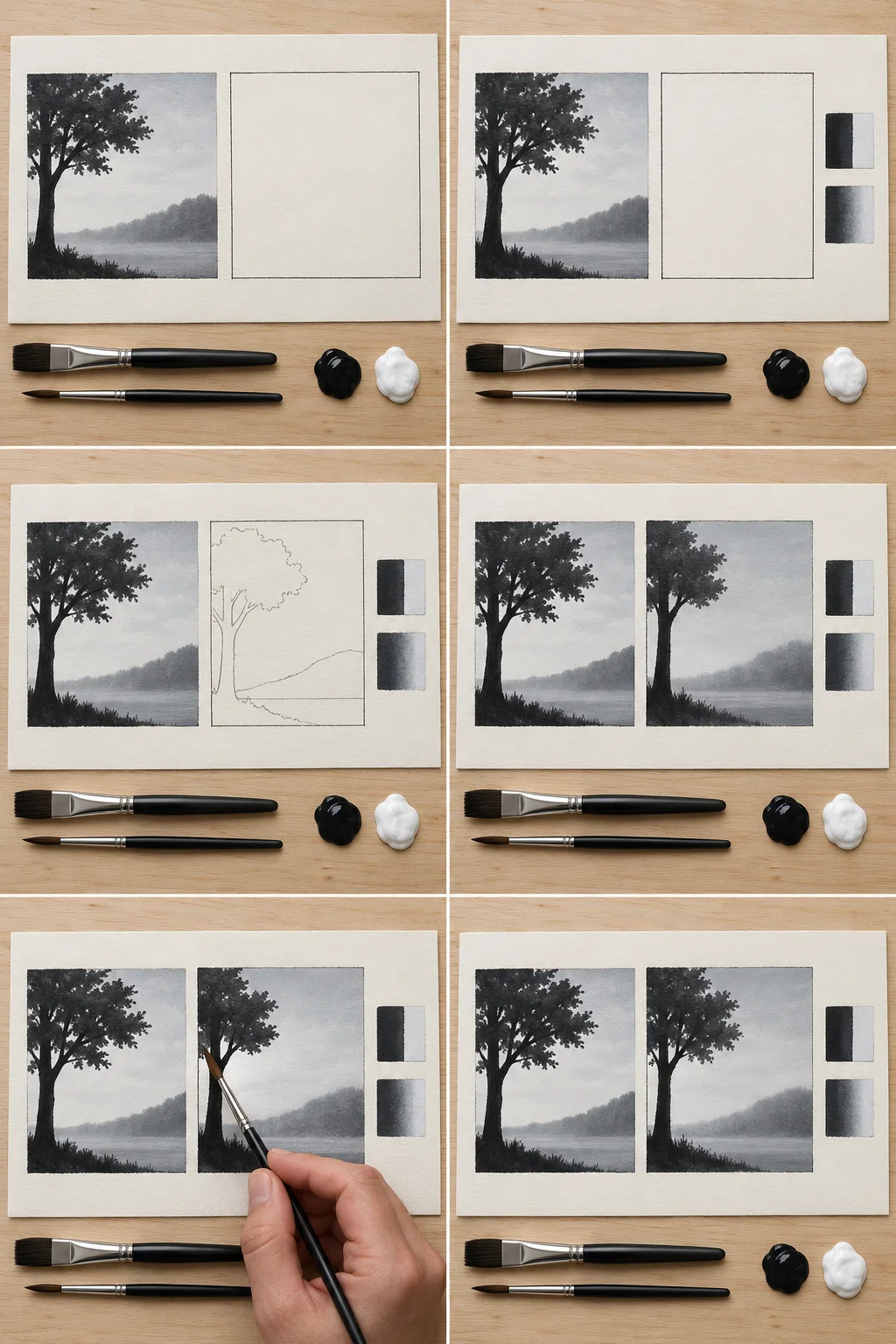
See where shapes meet.
Compare a crisp boundary with a gradual change, then practise both in a small part of your artwork.
Give a simple building depth.
Match the visible slants and side widths of a boxlike building, one light line at a time.
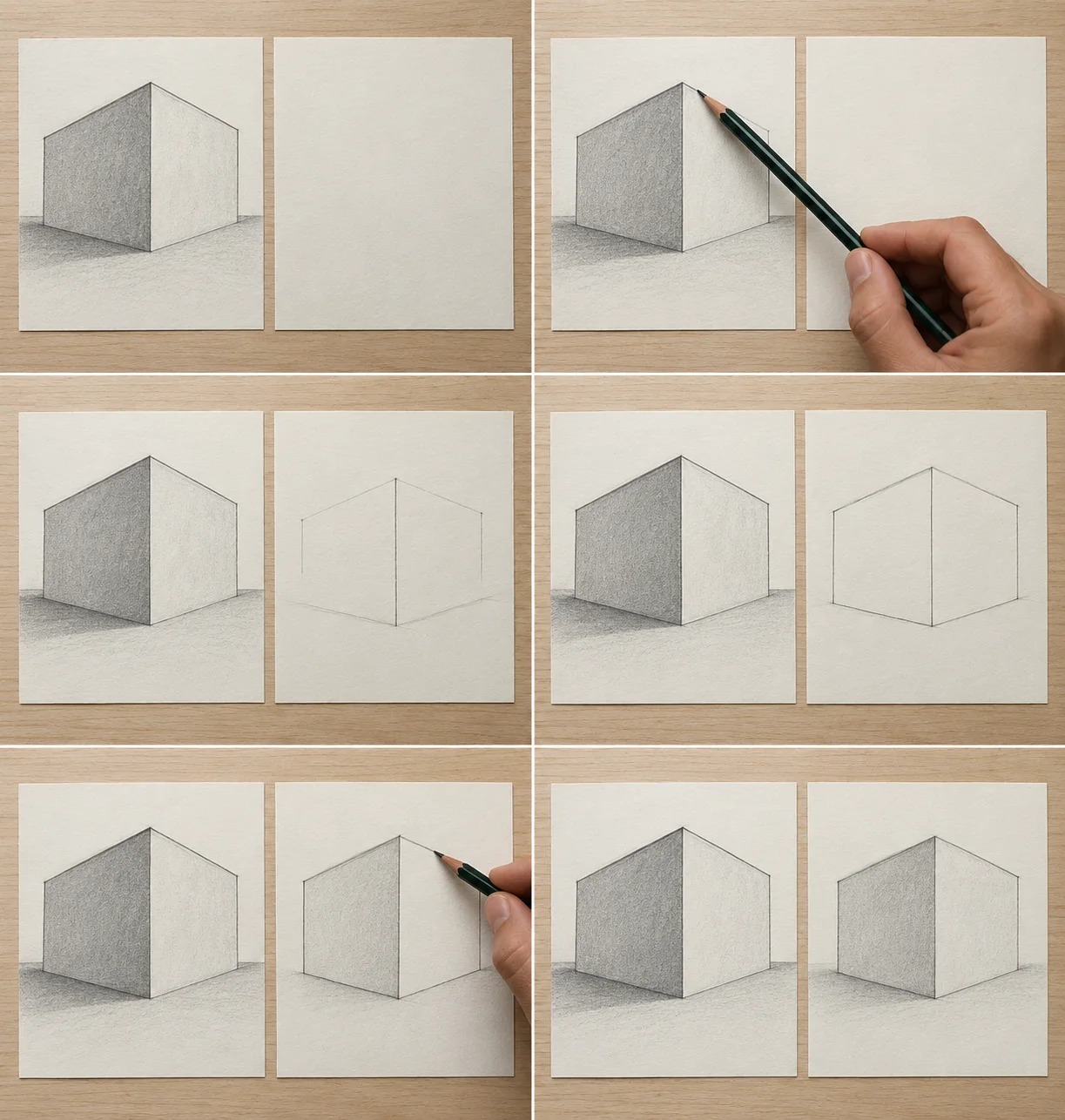
Make a surface look rounded.
Follow light through middle to dark across one rounded part of your artwork, then refine the changes between them.
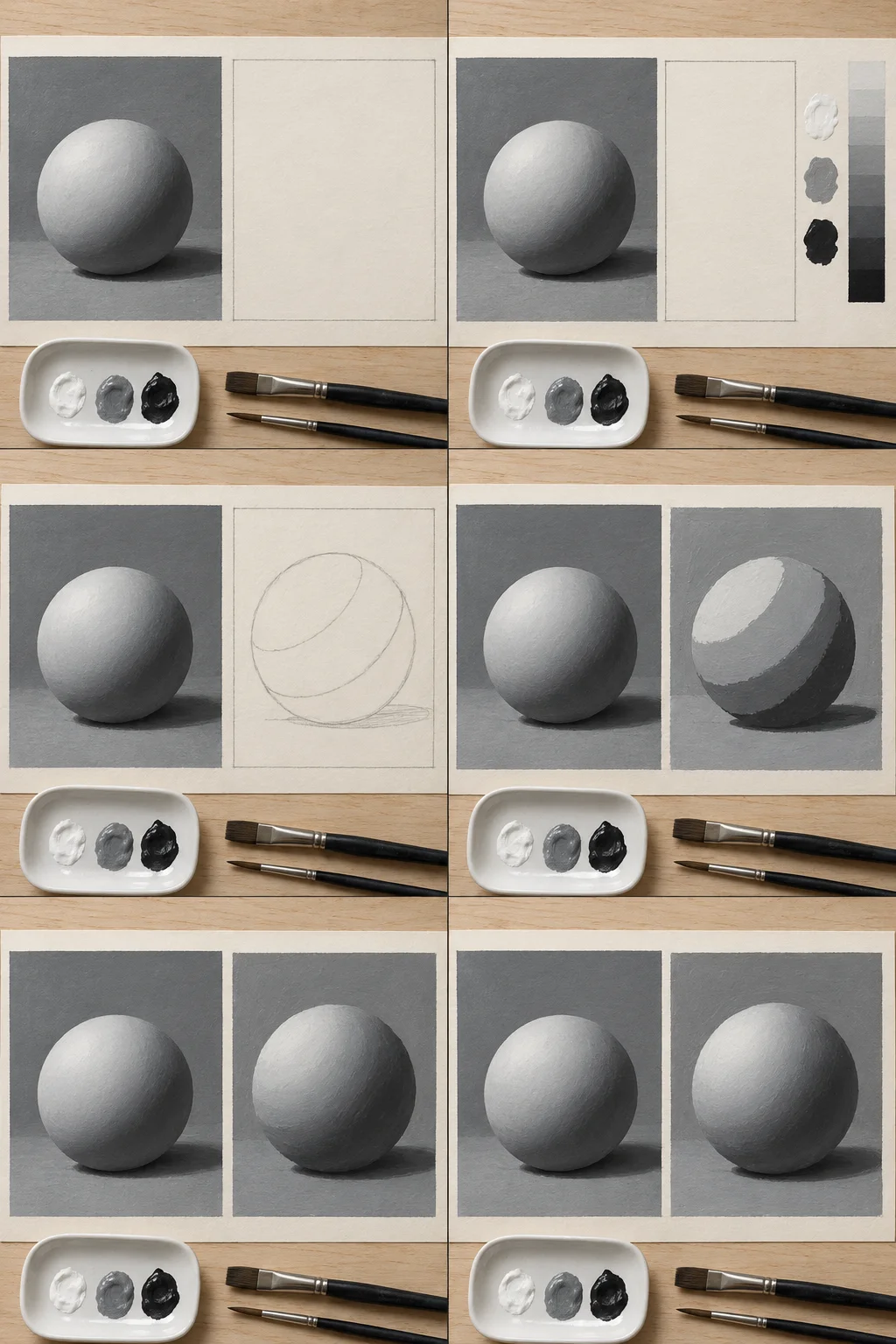
Original lesson illustrations, shown here as previews. In your session, apply the steps to your chosen museum artwork.
Make room for your kind of practice
You choose
the pace.
Choose a 20-minute plan, a 45-minute plan or an open-ended long study. Each study has its own steps.
Choose your drawing or painting material to see what you need and how to use it.
Build a practice planTimed practice / preview
05:00One reference.
A little time to draw.
Just want to draw?
Pick a reference.
Draw at your own pace.
Keep an artwork beside the timer and see what you notice. Pause whenever you need to, zoom in for a closer look, or try a new reference when you’re ready.
Find a reference & start the timerFollow your curiosity
Find something you
want to draw.
A face, a quiet landscape, the curve of a leaf. Browse museum drawing references by subject and choose what catches your eye.
- Portrait referencesStudy expression, planes, and proportion.
- Figure drawing referencesStudy pose, proportion, and structure.
- Animal drawing referencesObserve structure, gesture, and character.
- Landscape referencesPractice depth, atmosphere, and composition.
- Architecture referencesBuild confidence with perspective and form.
- Still life referencesSlow down with familiar objects and light.
- Plant drawing referencesObserve botanical structure and detail.
- Master study referencesDraw or paint from an existing artwork.
Art to spend time with
Study from museum collections.
The Metropolitan
Museum of Art
The Cleveland
Museum of Art
Explore reviewed artworks with their artist, museum credit, available rights information and original source attached.
Museroll is an independent website, with no affiliation to either museum.
About the references & their sourcesLeave with a starting point
Make a little
time for art.
Choose a reference, get your materials out, and begin.