Values
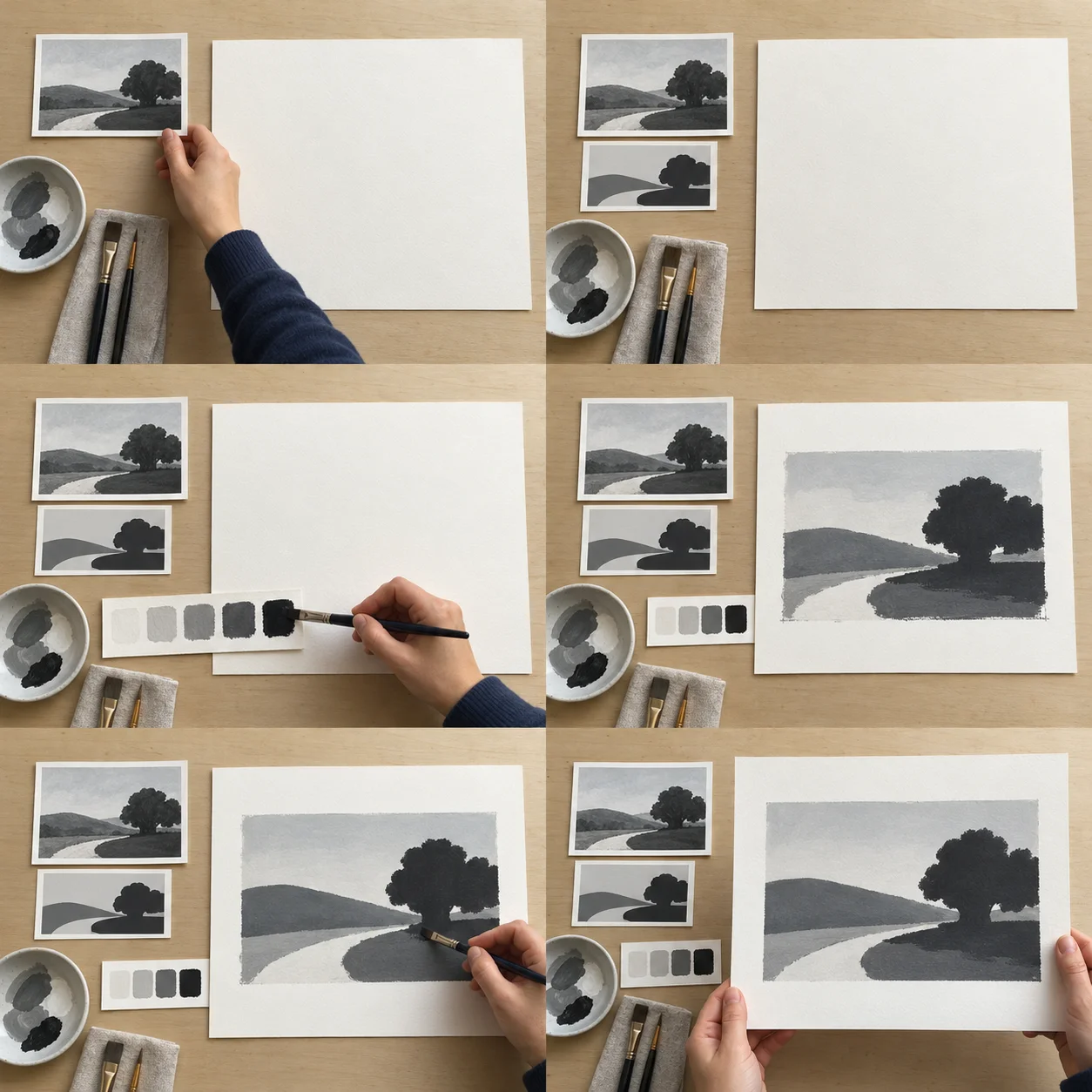
Practise grouping light and dark areas so the big shapes are easier to see.
20 minutes · 45 minutes · Long study
Practise valuesPractice!
Choose a drawing or painting exercise and a museum artwork to practise from.
Pick your tools and study length, choose a reference, then follow the steps.
Choose a 20-minute plan, a 45-minute plan or an open-ended long study for any focus.
These original teaching examples show the goals. Apply the task to your chosen museum artwork and material; your study can remain simpler. Choose another reference if the features you need are not visible.
Practise grouping light and dark areas so the big shapes are easier to see.
20 minutes · 45 minutes · Long study
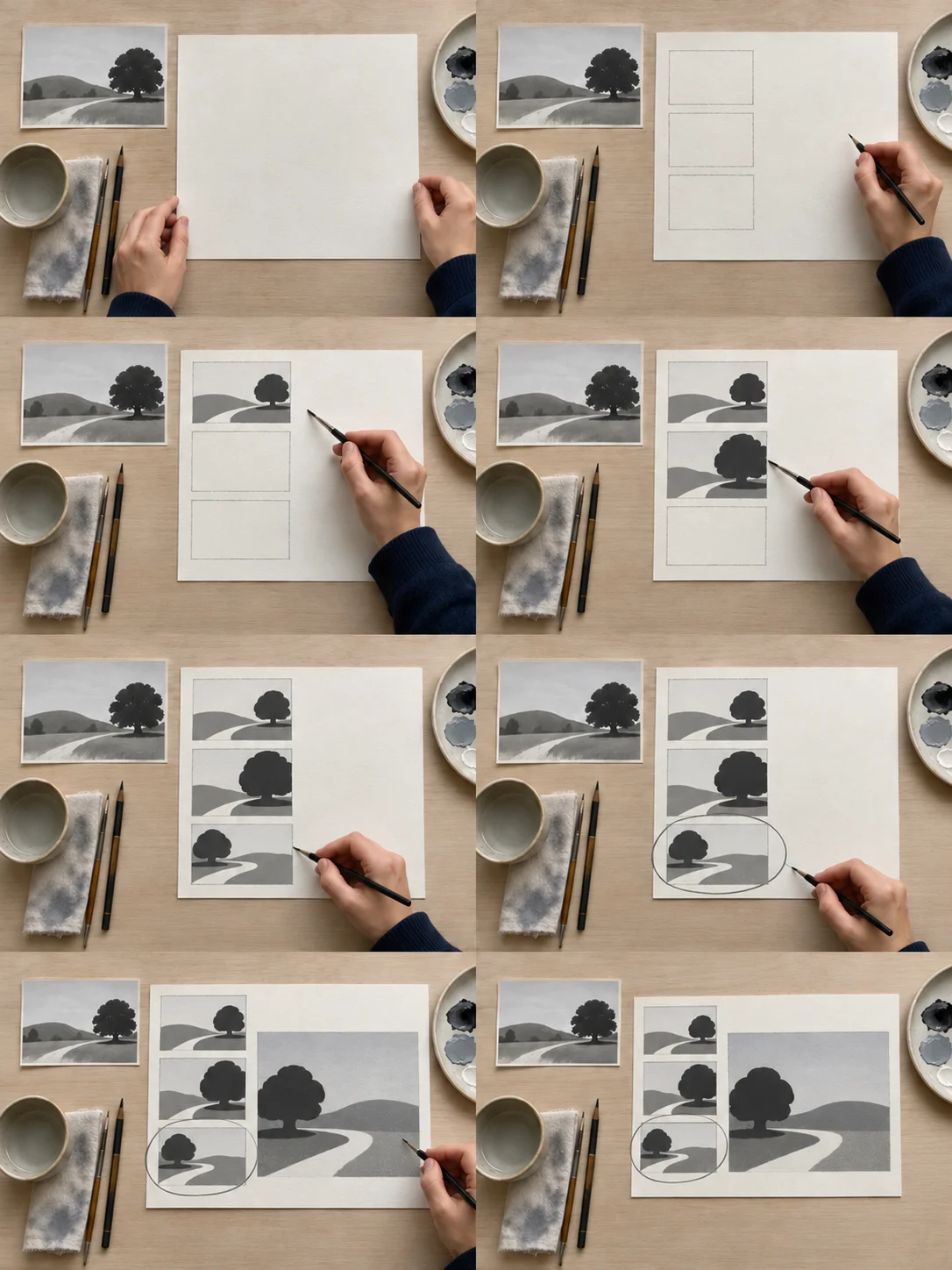
Practise valuesCompare small sketches of the big shapes and the spaces around them before choosing an arrangement.
20 minutes · 45 minutes · Long study
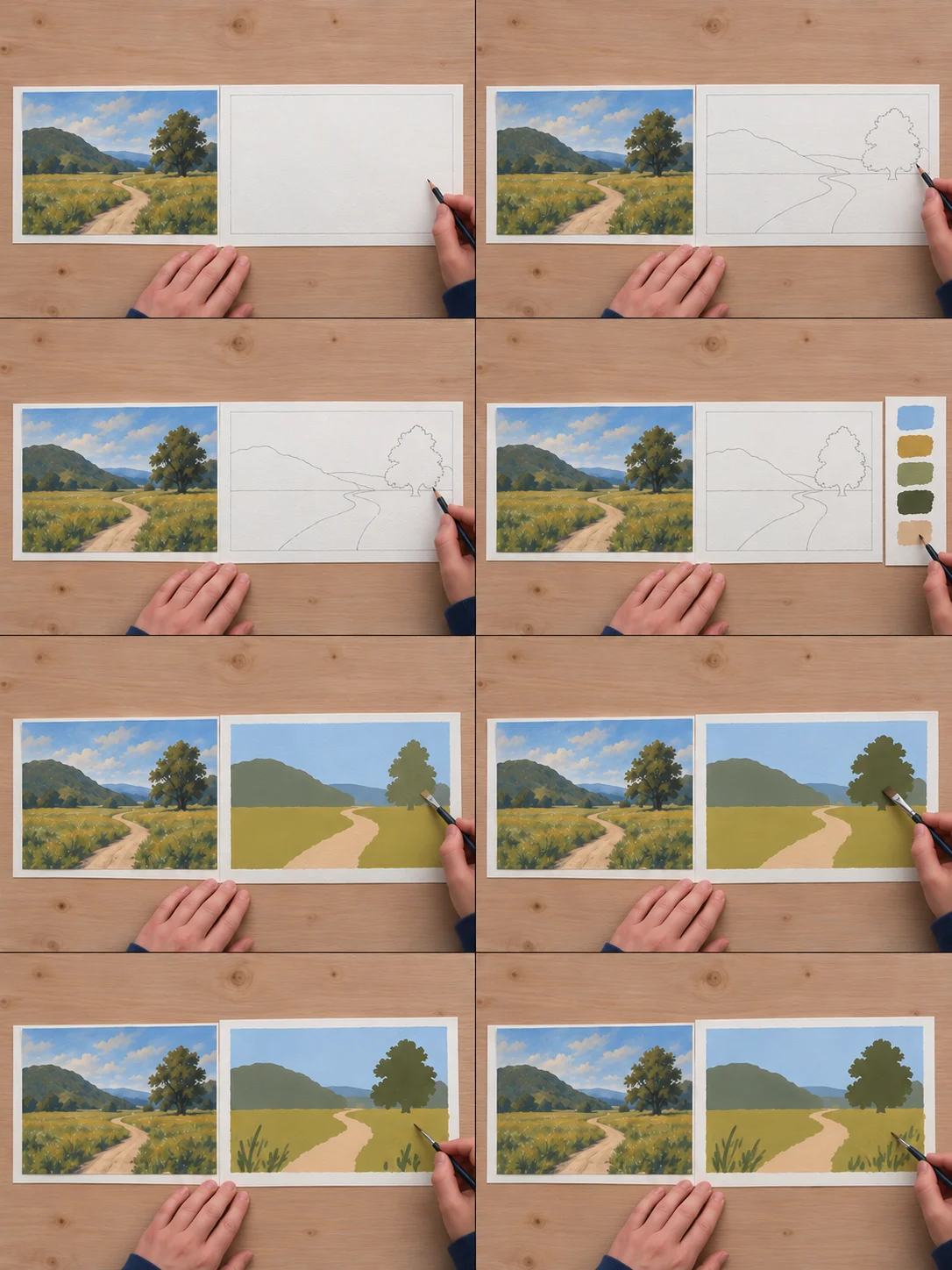
Practise compositionFollow the original shapes and arrangement, from first outlines to a simplified copy or a longer, more detailed study.
20 minutes · 45 minutes · Long study
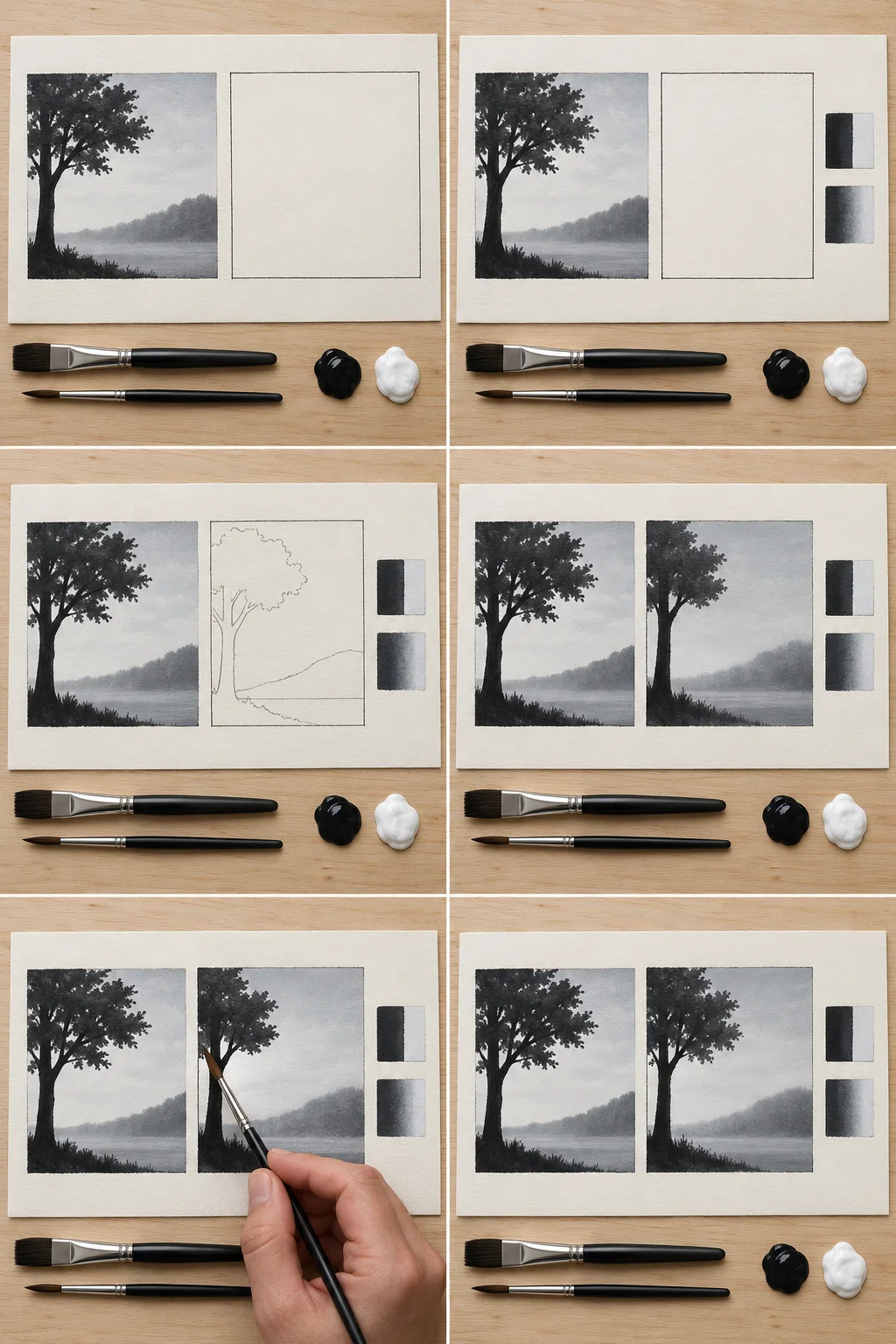
Practise master copyCompare a crisp boundary with a gradual change, then practise both in a small part of your artwork.
Choose a small area with both a sudden and a gradual meeting between neighboring areas.
20 minutes · 45 minutes · Long study
Practise edgesMatch the visible slants and side widths of a boxlike building, one light line at a time.
Choose a boxlike building with two visible side faces and clear edges going away on each side.
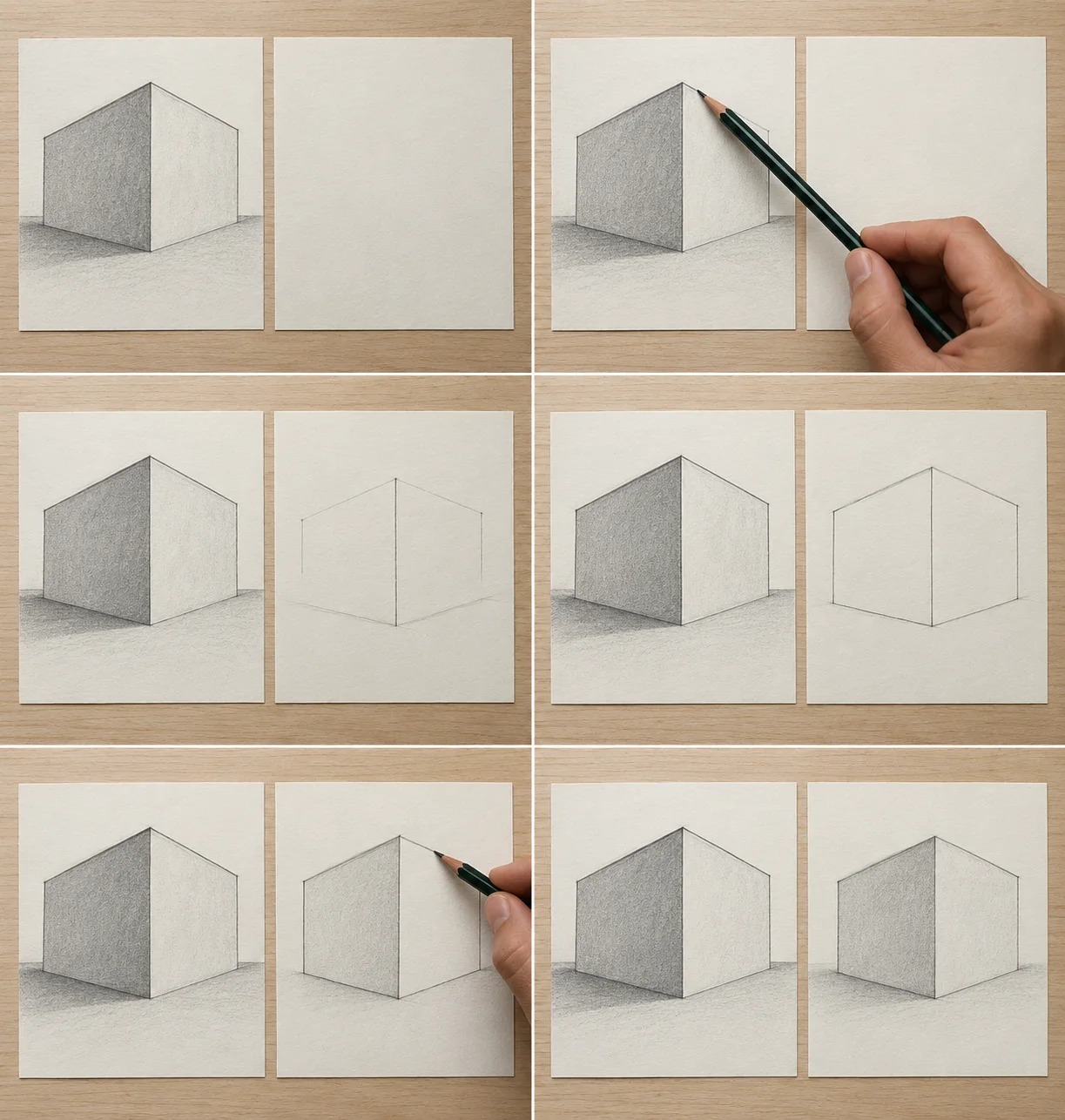
20 minutes · 45 minutes · Long study
Practise perspectiveFollow light through middle to dark across one rounded part of your artwork, then refine the changes between them.
Choose a rounded area with a gradual change from light through middle to dark.
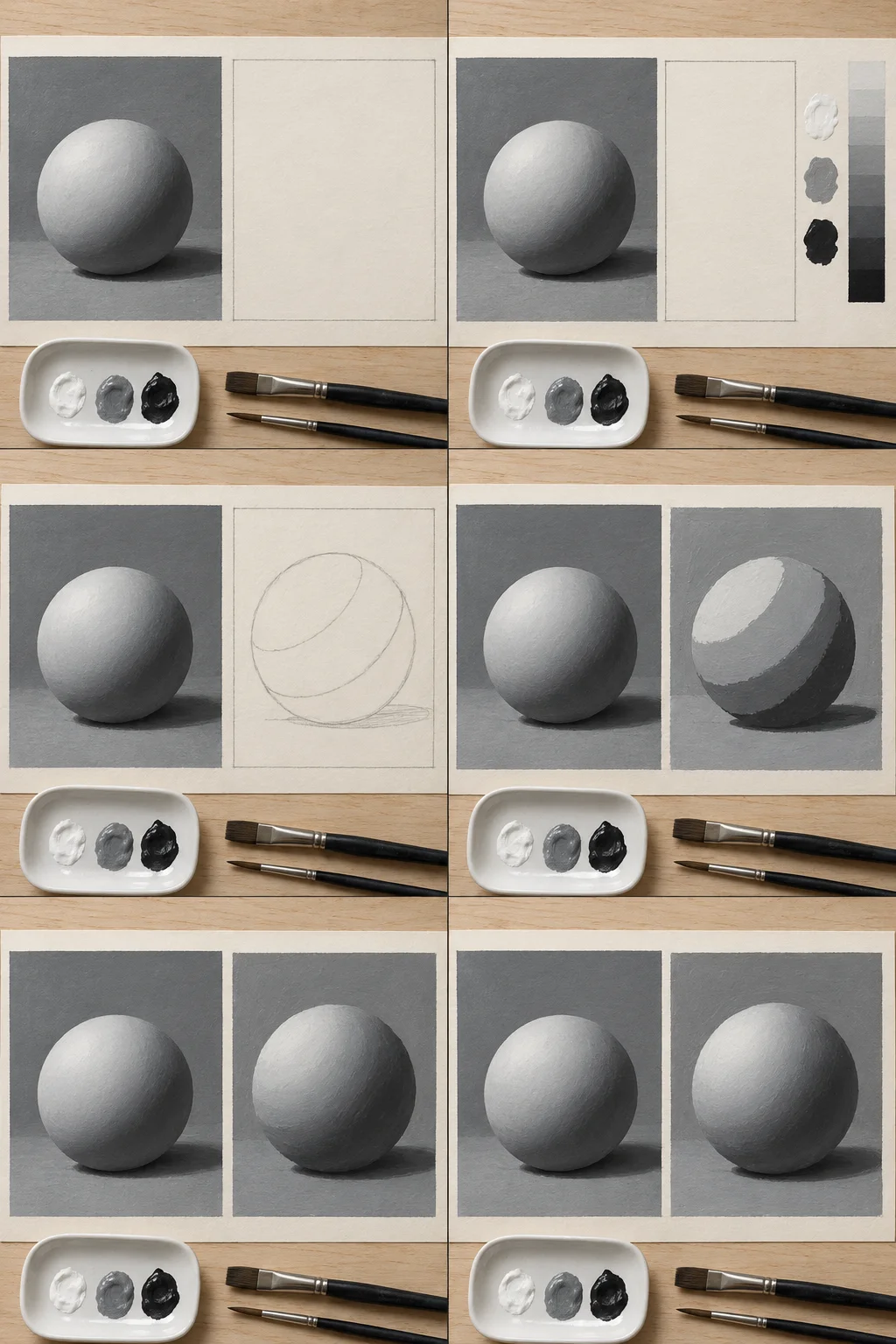
20 minutes · 45 minutes · Long study
Practise lightingOil, acrylic and watercolor use painting references. With pencils or pastels, you can also study drawings and other artworks.
Your material is what you use for practice. Artwork medium describes how the original was made. Changing your material starts a new plan and clears kept choices.
Fetching artworks from the museums. Choose your tools while you wait.
Choose one artwork to keep beside your steps. Click an image to look closer.
Describe the reference with three to five large light and dark groups. Start with the largest groups and leave small detail out.
Make three small versions of the reference. Change the position or size of the largest shapes in each one, then develop the clearest version into a larger study.
Follow one painting from start to finish in the examples below. Apply each step to your chosen artwork using your own materials.
Hold the study at arm’s length. Can you see the three to five large light and dark groups before the detail? If yes, you are done.
Hold the study at arm’s length. Can you spot the biggest shape and the largest blank area before the detail? If yes, you are done.
Three small boxes let you compare arrangements before you commit to one larger study.
Match the shape of your boxes to the shape of your reference.
Value means how light or dark an area looks. Group areas with similar lightness into one shape.
Prefer to draw without a plan? Browse references with a timer.